
I PROTAGONISTI DELLA MAREMMA
By Leandro Ricci
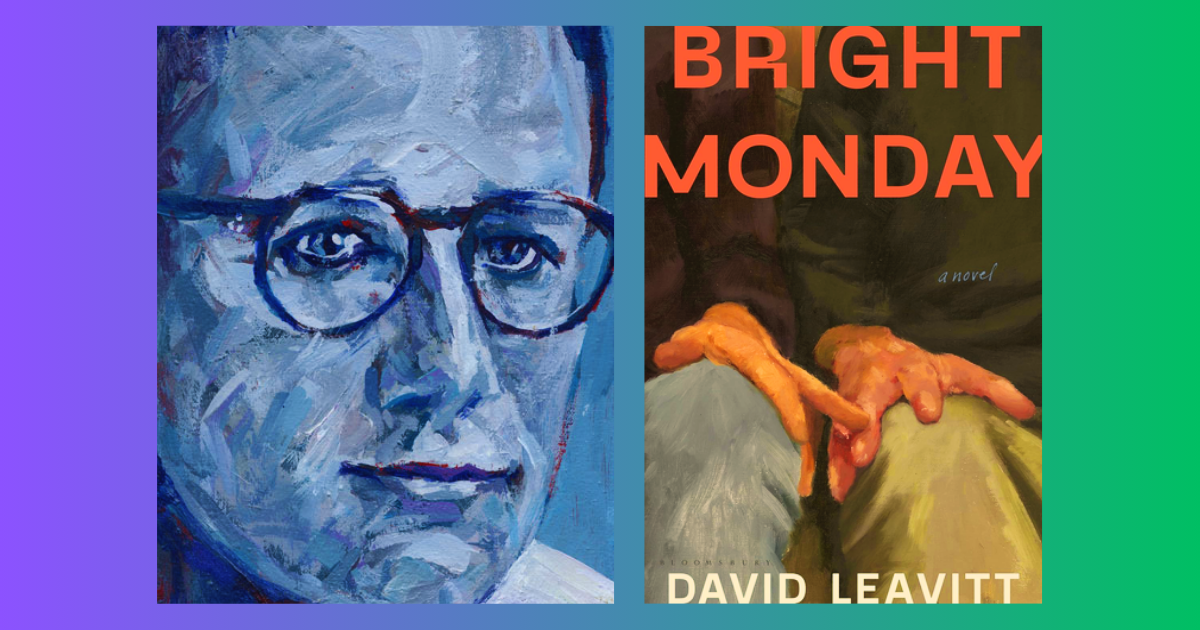
If I remember correctly, it was precisely by reading an article by the writer Pier Vittorio Tondelli, within his “Culture club” column in the historic Italian music magazine Rockstar, that I discovered the great narrative talent of David Leavitt. Today it may seem strange that during the 1980s, an Italian intellectual could have such an influential cultural space inside a regular music magazine. Fernanda Pivano also reviewed the works of David Leavitt and other American writers with enthusiasm, coining the term “minimalists” for them, and certainly not to diminish their grand literary quality. David Leavitt‘s debut book, Family Dancing, published for the first time in Italy by Mondadori in 1986, represented a true turning point in the way “high” literature approached themes related to homosexuality. The sensitivity and lucidity with which the writer treated such complex subjects represent a unique phenomenon in the recent history of world literature. The protagonists of those nine stories speak to us without any rhetoric, capturing our attention thanks to an essential and at the same time poetic style. The following year, the Italian translation of his first novel, The Lost Language of Cranes, was released, followed by Equal Affections, While England Sleeps, Arkansas, and others. All these works by David Leavitt represented a genuine cultural emancipation from the way themes of sexuality and homosexual affectivity had been conceived until that moment. The writer has always shown a great interest in Italy, staying first in Florence, then in Rome, and finally settling for a few years in Maremma together with his partner and writer Mark Mitchell. The fruit of that experience is condensed in the book co-authored by both, In Maremma: Life and a House in Southern Tuscany. But that is not what we would like to talk to him about. While awaiting the release of his new book, Bright Monday, scheduled for January 12, 2027, we have attempted to ask him a few questions.
Throughout your rich literary production, you have possessed the rare gift of emancipating the theme of homosexuality from that heavy burden of rhetorical morbidness that other great authors of the past had inevitably transferred into their works. In the nine stories that compose your debut book Family Dancing, the lives of the protagonists are narrated with a style so direct and disarming that it evokes a natural sense of identification in the reader. In your first novel The Lost Language of Cranes, published in Italy in 1987, the two protagonists Philip and Eliot live their love story in the progressive New York of the 1980s. Although a contrast emerges throughout the novel between the characters’ true identity and the conventional morality prevailing within familial spheres, you succeed in describing those relationships with a clarity and naturalness never achieved until then. How did you manage to accomplish this breakthrough without falling into the rhetoric of “resentment” common to much of the homosexual literature that preceded it?
David Leavitt: I was in my early twenties when I wrote the stories collected in Family Dancing, most of which, to varying degrees, derived from my very limited life experience up until this point. This was not a choice I made consciously, but rather subconsciously. I told myself I was writing about family situations complicated by the fact that one member of the family was gay. I too was frustrated with most of the so-called “gay fiction” that I had encountered up until this point, although as I later learned, there were many books in circulation of which I was simply unaware and that later became immensely important to me, most notably E. M. Forster’s Maurice, Glenway Wescott’s The Pilgrim Hawk, and J. R. Ackerley’s We Think the World of You, to name only a few. In fact the writers who mattered most to me in those years—Grace Paley, Flannery O’Connor, Alice Munro—were straight women whose work suggested a way into a topic that had not generally been handled with much in the way of literary care.
In a recent interview, you expressed that literature is unlikely to have an immediate impact on the general fortunes of the world. Don’t you believe that simply reading Family Dancing might heal the wounds of a young person, a father, or a rising politician of our time, or dismantle the retrograde tendencies currently present in many modern societies?
David Leavitt: I don’t doubt that Family Dancing, at the time of its publication, made a big difference to young gay men. Possibly it even made a difference to their families. But did it make any substantial political or social difference? When I read about the efforts to purge all references to sexual identity from syllabi at Texas universities, do I imagine that waving a copy of Family Dancing in the face of the hateful right wing will transform them into compassionate and understanding people? Not a chance.
In your latest novel Shelter in Place, released as a preview in Italy in 2020 under the title Il decoro, you offer a rather transparent critique of the election of Donald Trump. It is as if your characters feel helpless in the face of the emerging new global political alignments. Do you heavily feel the weight of the new conservative climate blowing across America and Europe? Do you believe it is inevitable that this will influence the narrative fabric of your works or the future of art in general?
David Leavitt: The current political situation—global, but controlled to an alarming degree by the mad, erratic, and rage-induced conduct of Donald Trump—is crushing. In order just to get on with my life, I must limit the amount of political news that I take in. Also I’ve given up on making predictions. At this moment, Trump is crashing. At this moment, in Florida, the Democratic candidate for governor is leading. I’m glad for that, but after the 2024 election, I no longer put any faith in polls or the bloviations of pundits. I hope that the situation improves, but even if it does improve, the damage that Trump has wrought will leave permanent scars. Also we are at a moment in history when things change so fast that a book meant to evoke the world as it is right now will already be obsolescent by the time it’s published. So no, I don’t plan to write anything explicitly political in the near future, although I suppose the project I’m working on now, though concerned entirely with the world before 1956, attempts to explain, if not how to get out of this situation, then at least, in part, how we got into it.
You were born in Pittsburgh and raised in Palo Alto. We know how much you love Italy, and Florence in particular, to which you dedicated the beautiful book Florence: A Delicate Case, which has not yet been translated into Italian. After living in Florence, you moved to Rome and later renovated a farmhouse in Semproniano, in Maremma, where you lived for several years with your partner Mark Mitchell. Your book In Maremma: Life and a House in Southern Tuscany is the vivid testimony of that experience and is also available in its original language. I will not ask you anything regarding your relationship with Italy, as it has been extensively expressed in your books. If I may, I would like to ask you another question. In the United States, the concept of “home” as a place of identity has always been conditioned by a strong propensity for job mobility or confined to specific family plans. I recall, for instance, that in the past, many middle-class retirees used to move to Florida to spend their final years in a warmer, more favorable climate. There is a tendency to believe that, at a certain point in life, a nostalgia surfaces that inevitably draws us back to the places where we were born. Do you have a personal definition of home that you would care to share with us?
David Leavitt: Home, for me, is anywhere that I can live with my husband, Mark, and my dog, Ollie. Here in Gainesville, we’ve lived in the same house—this astonishes me—for twenty-three years. That house, more than any in which I’ve ever resided, is home, but America is not. My spiritual home—my destiny—is Europe and Italy, to which I hope to return when I retire from my job at University of Florida.
Your next novel Bright Monday, published by Bloomsbury Publishing, will be released on January 12, 2027. From the little we know, it will be set in Milan. Could you tell us if an Italian translation is planned, as is usually the case for most of your works? What could you preview for us about your new book?
David Leavitt: Bright Monday, which will be published in Italy with the title Pasqua, Pasquetta, is set over the Easter weekend of 2022. Its narrator, Adam, has come to Milan to translate the novel that his friend Valeria has published under a pseudonym and that has become an unexpected global bestseller. Valeria’s novel, set in Palermo, is based on the life of Santa Rosalia, the patron saint of pandemics. This is important thematically, since most of the book concerns an accidental meeting, on Easter Sunday, between Adam and Francesco, an architect with whom he had an affair in the early 1990s in New York—the peak of the AIDS pandemic. At the time Francesco was living with Adam’s closest friend, Natalia, to whom he is now married. When Francesco invites Adam, spontaneously, to join his family for Easter lunch, he opens up the possibility of reviving the affair that they had in their youth. At this point the narrative moves back in time to New York. Two cities, two continents, two moments in history, two pandemics.
For a complete bio-bibliography of David Leavitt, we recommend visiting the author’s personal website: davidleavittwriter.com


Lascia un commento